Feb. 19, 26
1. What is the ODEX System?
ODEX (Oversize Drill EXtraction) is a pioneering down-the-hole (DTH) drilling system specifically designed to simultaneously drill and drive temporary casing in challenging overburden and unstable formations. Developed by Atlas Copco (now part of Epiroc), it revolutionized drilling in difficult ground by solving the problem of hole collapse.
2. Core Principle: How It Works
The ODEX system's genius lies in its integration of three key components that work together in a single pass:
1. A Special Oversize Bit: The pilot bit is larger in diameter than the casing.
2. An Eccentric Reamer: Attached behind the pilot bit, this asymmetrical, hinged reamer can swing outward.
3. Standard Casing: Threaded casing tubes follow the assembly.
The Process:
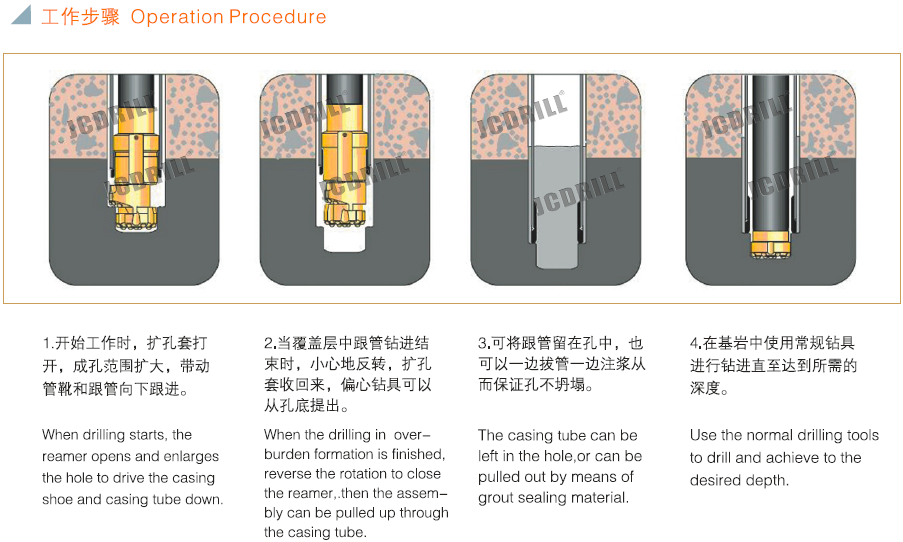
· Starting: The eccentric reamer is held in a retracted position to fit inside the casing. The assembly is lowered into a starter hole.
· Drilling & Reaming: The DTH hammer at the top of the assembly activates. It drives the pilot bit and, via rotation, causes the eccentric reamer to swing out centrifugally. This reams a hole larger than the casing.
· Casing Advancement: The casing, attached directly to the reamer body, is pulled forward into the oversized hole as drilling progresses. The hole is cased simultaneously from the top down.
· Retrieval: Upon reaching target depth, the drill string is reversed. The reverse rotation causes the eccentric reamer to retract back into the casing, allowing the entire drill string (hammer, bit, reamer) to be pulled back up through the installed casing.
· Casing Recovery: After completing the in-hole work (e.g., core drilling, installation), the casing can be recovered using a vibratory hammer or a casing puller, often reusing it for the next hole.
3. Key Components
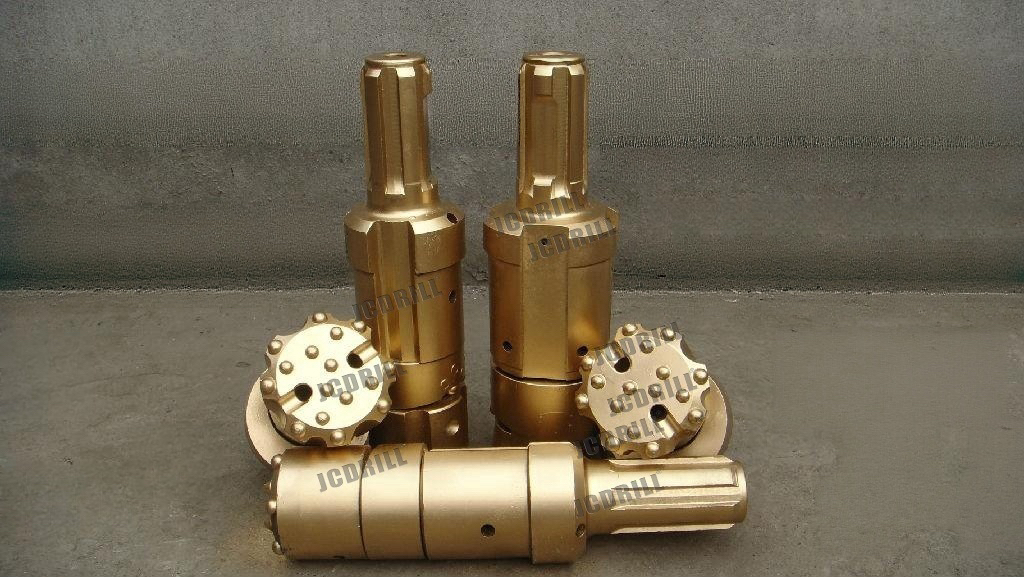
· ODEX Adapter (Bottom Drive): Connects the DTH hammer to the casing string and transmits the hammer's impact energy to the casing shoe.
· Eccentric Reamer: The heart of the system. Its offset design creates the oversized hole.
· Pilot Bit: A standard DTH bit that leads and creates the pilot path. Sized to the final desired hole diameter inside the casing.
· Casing Shoe: A hardened, threaded section at the bottom of the first casing tube that takes the direct impact and protects the casing threads.
· Standard Casing Tubes: High-strength, threaded steel pipes. Their OD is smaller than the reamed hole.
4. Primary Advantages & Applications
Advantages:
· Hole Stability: Instantly stabilizes collapsing holes in sand, gra vel, boulder beds, and fractured rock.
· Single-Pass Efficiency: Drills and cases in one continuous operation, saving massive amounts of time compared to pre-casing or mud rotary.
· Versatility: Effective in a vast range of the most difficult overburden conditions.
· Reduced Fluid Use: Often requires little to no drilling fluid, making it cleaner and suitable for environmentally sensitive areas or where water is scarce.
· Casing Recovery: Casing is almost always recovered and reused, reducing consumable costs.
· Straight Holes: The full-length guide casing ensures a straight, clean borehole.
Typical Applications:
· Geotechnical Investigations: Drilling for soil/rock sampling in unstable overburden before core drilling starts.
· Mineral Exploration: Setting up stable portal holes through glacial till or colluvium to reach bedrock for core sampling.
· Water Well Drilling: Constructing wells in alluvial aquifers (sand & gravel) where hole collapse is a major issue.
· Foundation & Piling: Drilling guide holes for micropiles, ground anchors, and site investigation in urban areas.
· Horizontal Directional Drilling (HDD) Pilot Holes: For river crossings or unstable ground where borehole stability is critical for the pullback phase.
5. Comparison with Other Casing Methods
Method Principle Best For Speed Casing Recovery
ODEX Simultaneous drill & case with eccentric reamer Unstable overburden, boulders, mixed ground Very Fast (single pass) Excellent (via retraction)
Hollow Stem Auger (HSA) Advances casing (auger) by rotary cutting Cohesive soils, clays, silts Fast Good (by reverse rotation)
Dual Rotary Uses two drives: one for casing, one for bit Very large diameter, deep overburden Fast Possible, but more complex
Pre-Casing / Follow Casing Case ahead, then drill inside Simple unstable ground Slow (multiple steps) Difficult
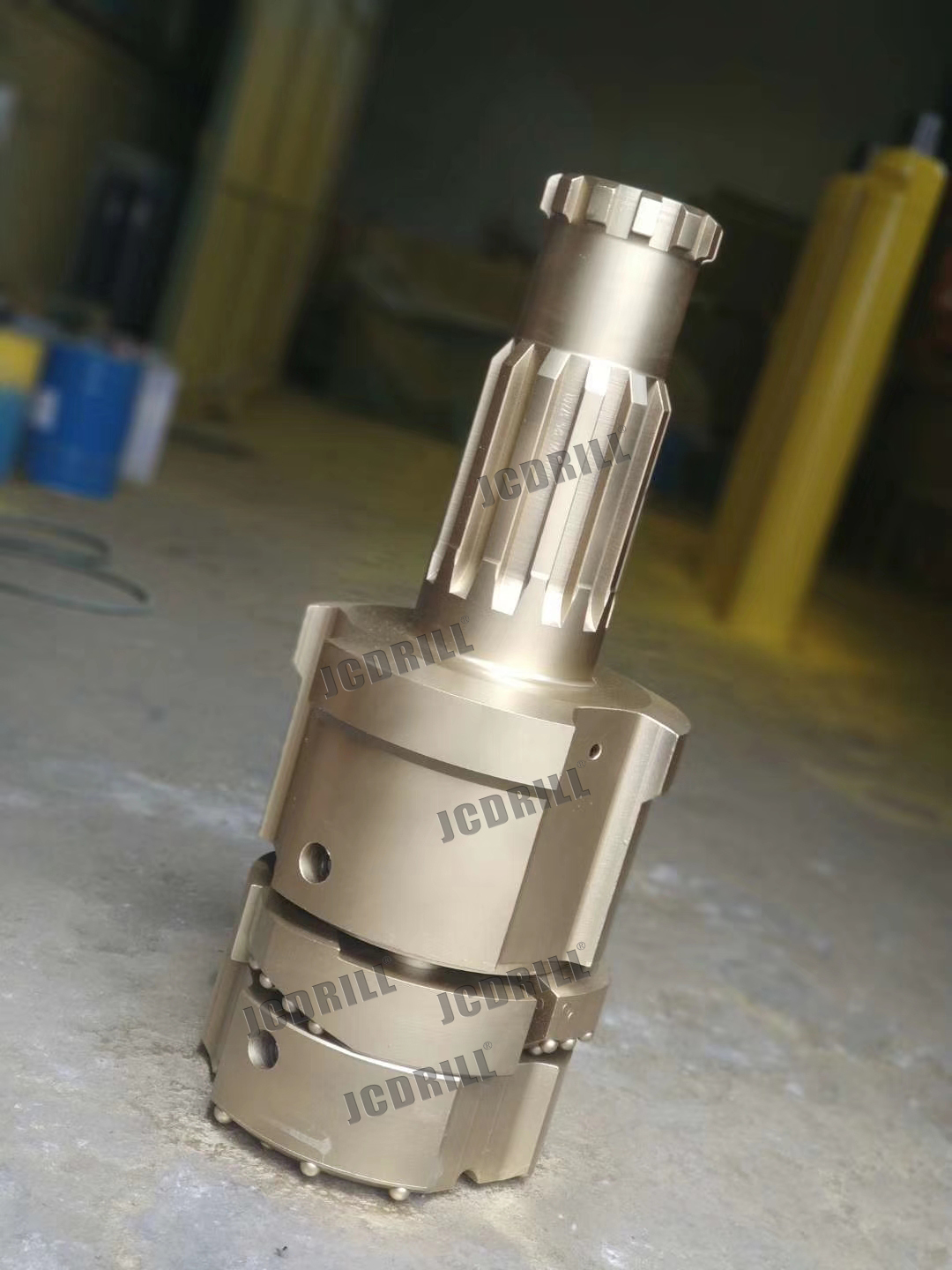
6. Limitations & Considerations
· Boulder Obstructions: While excellent in bouldery ground, extremely large or stubborn boulders can stall progress or damage the reamer.
· Formation Change: If rock becomes too hard or abrasive, DTH drilling efficiency may drop, and wear on the eccentric reamer increases.
· Diameter Limitations: The need for an eccentric reamer limits the minimum practical hole size (typically ~115mm and up for the cased hole).
· Initial Cost: The specialized ODEX tools (adapter, reamers) represent a higher initial investment than standard DTH tools.
· Operator Skill: Requires trained drillers who understand the system's mechanics to avoid getting the tool stuck.
Conclusion
The ODEX system is a landmark technology in overburden drilling. It elegantly solves the fundamental problem of hole collapse by integrating the casing process directly into the drilling cycle. For drilling in unstable, difficult, and bouldery formations, ODEX offers an unmatched combination of speed, reliability, and cost-effectiveness, making it the system of choice for demanding geotechnical, exploration, and water well projects worldwide. It exemplifies the principle of "drill and case in one pass," a standard now emulated by other modern systems.
Previous: Unleash Drilling Potential with Custom-Built JCDRILL Crawler Water Well Rigs
Next: JCDRILL Crawler-mounted Core Drilling rig: A Technical Overview
 |
| 
 Français
  Español
  عربي
عربي  中文
中文